Leadership at Home
The Apology That Changed My House
By Derrick Holmes · September 14, 2026 · 5 min read
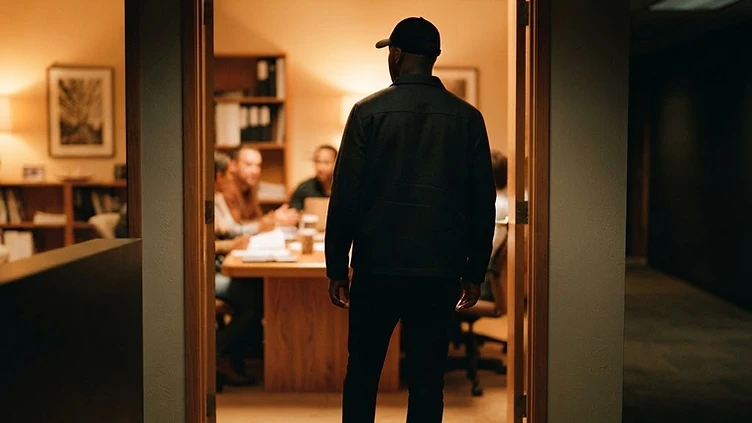
The hardest room to own your mistakes in is the one that matters most.
Here's something I could do at work for twenty years without breaking a sweat: own a mistake in front of my boss.
"I missed it. That's on me. Here's how I'll fix it." Clean. Professional. Done.
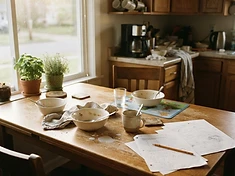
And here's something that took me years longer: saying a version of that at my own kitchen table — to the people who had no power over my career, nothing to promote me with, and every reason to already know my worst.
That asymmetry should tell you something. The hardest room to own your mistakes in is the one that matters most. Because at work, an apology is strategy. At home, an apology is truth — and truth to the people who can see right through you is a different weight entirely.
The apology my family never got
For a long stretch, my apologies at home were the defensive kind. The kind with the word "sorry" stapled to the front of a defense. I'm sorry, but I've been slammed at work. I'm sorry you feel that way. I'm sorry, but if you'd just—
Everyone in the room could feel what those were: redirects. I was apologizing for the friction their feelings created for me, not for what I'd done to them. And the people who love you don't need the wording improved. They need the ownership upgraded.
The apology that changed my house
Then one night I got it right — finally — and I want to hand you the anatomy of it, because it's the same three parts that work everywhere, just harder at home:
1. Name it without softening it. Not "if I've been distant." Actual words: "I've been short with you and absent this month. That's on me." Precision is respect. Vague apologies ask the hurt person to do your translation for you.
2. Take all of it — no 'but.' The word "but" deletes everything before it. At home there's no 10% to carve out and no colleague to share blame with. Take the whole weight. It's lighter than it looks, and it's the only version that lands.
3. Change something measurable. An apology without change is manipulation with better wording. The apology that rebuilt trust in my house wasn't the night I said it — it was the thirty evenings after it, when the behavior matched the words. That's when my family stopped bracing.
Why your kids need to see it most
Here's the part that finally made me diligent about it: your children are learning what authority does when it's wrong by watching you.
If they never see you apologize at home, they learn one of two lessons — either that power never admits fault, or that the people closest to you don't deserve the honesty you give strangers. Both lessons cost them for decades. One honest apology at the kitchen table teaches something no speech can: that the strongest person in the house can say "I was wrong" without flinching. That's the leadership inheritance worth leaving.
Leadership sometimes looks like apologizing first. And the first place it usually needs to happen is the last place we do it.
If you owe one tonight — no 'but,' no explanation, all of it, and a change they can measure — go say it. Your house is waiting on it.
The Full-Weight Apology
- Name one thing at home you've apologized for vaguely — and say it precisely this week.
- Retire the word 'but' from every apology you make this week.
- Pair your next apology with one change the other person can actually see.
A Question to Sit With
Who at home is still waiting on the apology you gave everywhere else?